You know that feeling when a Wisconsin summer finally breaks, and you crack open a window at night, hoping for that cool breeze? That’s precisely how a well-vented attic should feel for your home. I’ve walked through hundreds of houses across Wisconsin, and I can tell you this straight: when an attic can’t breathe, the rest of the house pays for it. Shingles wear out faster. Ice dams show up in winter. Energy bills creep higher every season.
If you are trying to improve attic ventilation, you are already thinking like a smart homeowner. Let’s explore five real, practical ways to do it, the same ones we talk about every day at Superior Roofing Company.
1. Balance Intake and Exhaust Vents
This is where most attics go wrong. People add vents without thinking about balance. Air needs a way in and a way out. If one side is missing, airflow stalls. Fresh air should enter low in the attic and exit high. That natural flow keeps heat and moisture moving instead of trapped.
Here are the most common ways homeowners can create that balance:
- Soffit vents allow cool air to enter near the eaves. They work best when spaced evenly along the roofline.
- Ridge vents run along the roof peak and let warm air escape across the full length of the roof.
- Gable vents can help older Wisconsin homes, though they work best when paired with soffits.
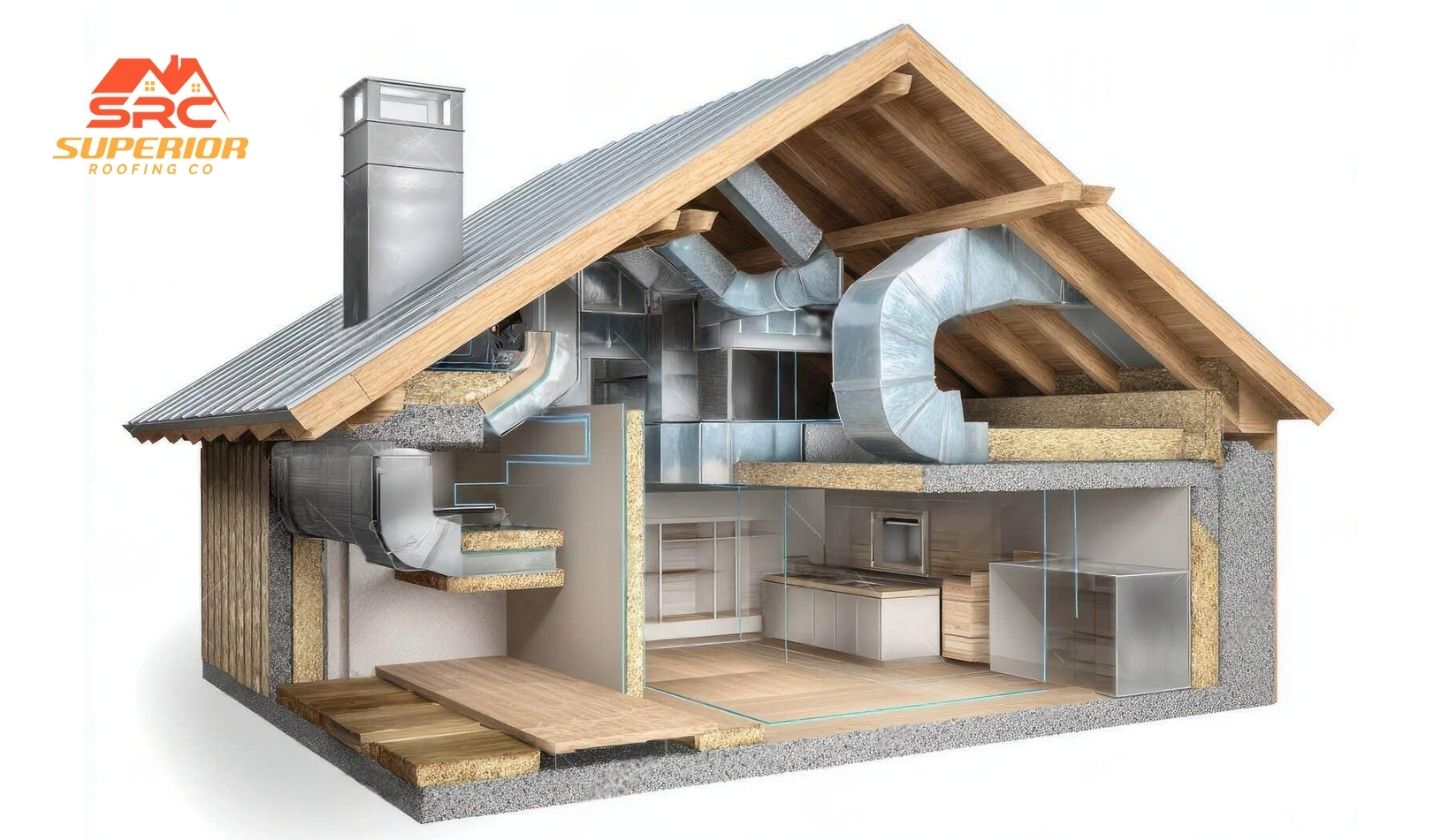
When intake and exhaust match each other, attic airflow improvement happens naturally. No guessing. No shortcuts.
Learn more here: Ice Dams Be Gone! The Importance of Proper Roof Ventilation in Duluth MN with SRC
2. Add Roof Vents Where Air Gets Stuck
I’ve seen plenty of attics where airflow starts strong and then just stops. Usually, the roof layout is the problem. Dormers, valleys, and long roof spans can trap hot air in pockets. If that sounds familiar, it may be time to add roof vents in targeted areas. This is one of the most direct solutions we use to improve attic ventilation.
Instead of overloading the roof, we focus on clever placement. That means:
- Positioning vents where heat collects the longest.
- Respecting proper vent spacing so airflow stays smooth.
- Matching vent type to roof pitch and attic size.
In Wisconsin, roof vent placement matters more than people think. Snow loads and ice buildup can block poorly placed vents, which is why experience matters here.
Also Read: Soffit and Ridge Vents Explained: Which Is Best for Your WI Home?
3. Clear Blocked Air Paths Inside the Attic
Here’s something many homeowners never see for themselves. Insulation can block airflow even when vents are installed correctly. Air comes in through the soffits, but insulation is pushed tight against the roof deck. That air has nowhere to go. Ventilation looks good on paper, but it fails in real life.
To fix this, we often install insulation baffles (Rafter Vents). These simple channels keep a clear path from the soffit to the attic space.
A few signs this issue may apply to your home:
- Ice dams form along the roof edge during winter.
- The attic feels stuffy even in cooler weather.
- Insulation appears packed tightly at the eaves.
If you are asking, can insulation block attic airflow? Yes, it absolutely can. Clearing those paths is one of the fastest ways to improve attic ventilation without touching the roof itself.
4. Decide If Mechanical Ventilation Makes Sense
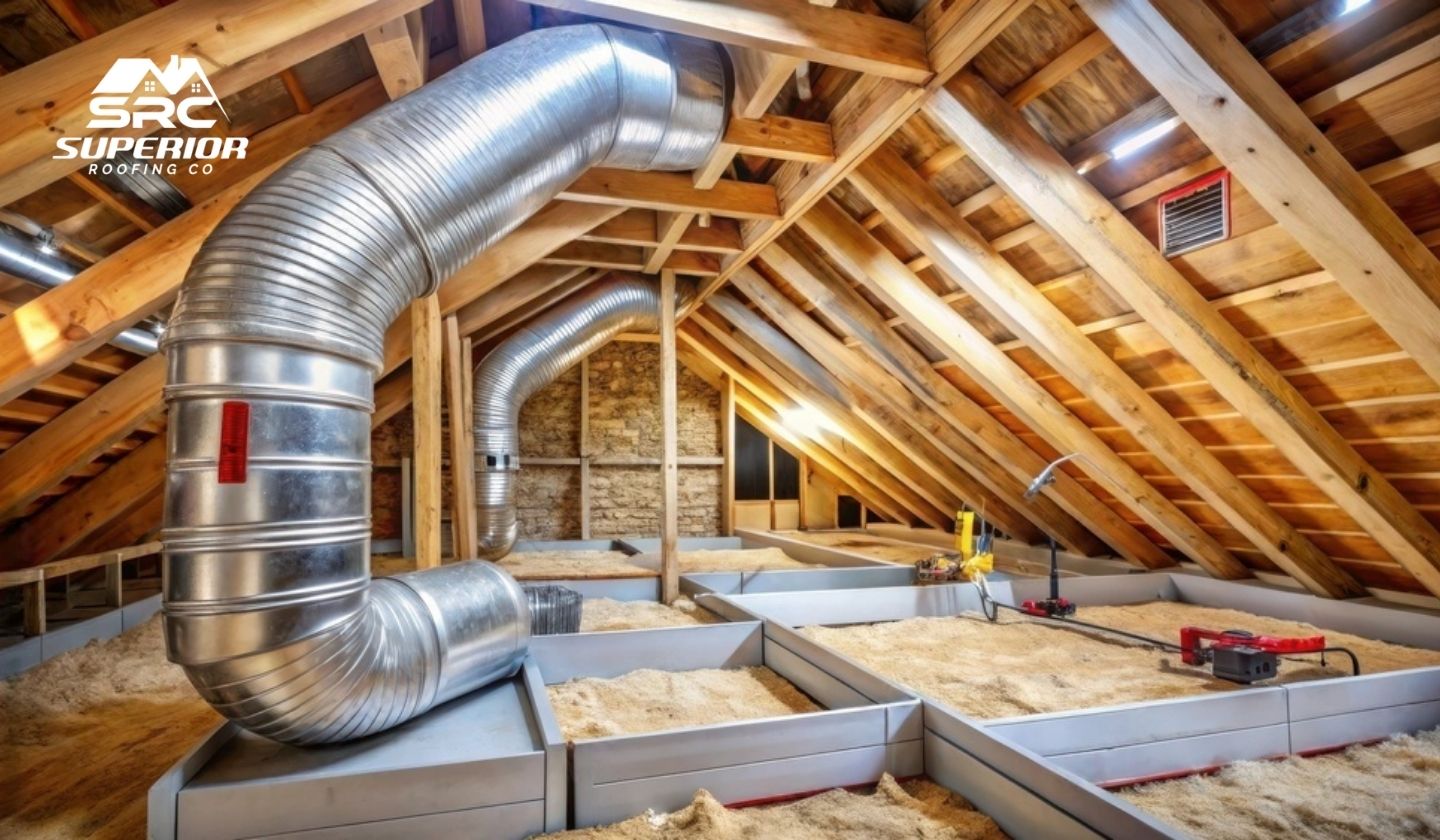
Sometimes, natural airflow just isn’t enough. Roof shape, low-slope designs, or shaded homes can limit movement. That’s when homeowners ask another big question: Is adding vents better than installing a fan? The answer depends on the attic.
Mechanical ventilation, such as attic fans, can help in specific cases. Solar-powered fans are familiar in Wisconsin because they don’t add to electric bills and activate when heat builds.
Here’s how we usually compare options:
- Natural vents work quietly and consistently when balanced correctly.
- Fans help pull air when natural movement slows.
- Fans must be sized carefully, or they can pull air from the house instead of the attic.
We don’t push fans as a first step. We use them when the structure calls for it. Used correctly, they support attic airflow improvement without causing new issues.
5. Know How Much Ventilation Your Attic Needs
This question comes up all the time: How much ventilation does an attic need?
Most building codes, including those followed across Wisconsin, use a simple ratio. For every 300 square feet of attic floor space, you need one square foot of net free ventilation area. Half should be intake. Half should be exhausted.
That ratio can shift if moisture levels are high or vapor barriers are missing. Older homes around Green Bay, Appleton, and Milwaukee often fall into this category.
Rather than guessing, we measure:
- Total attic square footage.
- Existing vent coverage.
- Intake versus exhaust balance.
This step alone often reveals why airflow balance feels off. Once you know the numbers, the fixes to improve attic ventilation become obvious.
Why This Matters for Wisconsin Homes?
Our climate isn’t gentle. Summers bring humidity. Winters bring snow, ice, and freeze-thaw cycles. Improving attic ventilation is more than just adjusting airflow. It allows you to protect your shingles, reduce the risk of ice dams, and help your home handle seasonal stress.
At Superior Roofing Company, we see the difference every day. Homes with proper vent spacing, clear air paths, and the right combination of attic ventilation solutions last longer.
Ready to Check Your Attic with Us?
If your attic hasn’t been checked in years, now’s a good time. Wisconsin roofs don’t give warnings forever, but they do give signs if you know where to look. And if you ever want a second set of eyes on it, that’s what we’re here for. Contact Superior Roofing Company at (218) 248-6060 today for a thorough roof inspection and to improve attic ventilation.